How Often Should a Youth Basketball Player Train?
More basketball is not always better basketball. For a young player, the goal is to get enough quality repetitions to develop skills without filling every available day with practices, games, workouts, and extra sessions.
For many families, the right basketball training schedule combines structured skill development, team commitments, independent practice, and genuine recovery. There is no single number of weekly sessions that works for every athlete. A player who is new to organized basketball has different needs than one who already has several team practices and games on the calendar.
A better question is: How much productive basketball can a young athlete handle while continuing to learn, recover, enjoy the game, and perform well in school and everyday life?

How Many Days a Week Should a Youth Basketball Player Train?
For most youth players, a productive schedule includes basketball activity several times during the week while preserving regular recovery days. That does not mean every basketball day needs to be a demanding organized workout.
Parents should look at the athlete's total basketball workload, including:
Team practices
Games and tournaments
Skills training
Individual shooting or ball-handling practice
Open gym sessions
Other organized sport activities
A player with two team practices, a game, and a skills session already has four structured basketball days. Adding several more intense workouts simply because "more practice means more improvement" can eventually reduce the quality of the work.
The American Academy of Pediatrics recommends that young athletes have at least one to two days each week away from competition and sport-specific training so they can recover physically and psychologically.
That makes recovery part of the training plan rather than something athletes earn only after they become exhausted.
Training Frequency Should Depend on the Player's Current Schedule
Before adding another workout, write down everything the athlete is already doing.
During a busy basketball season, a player might have team practices, games, school responsibilities, and weekend competition. In that situation, additional training may need to be limited and highly focused.
During a lighter period, there may be more room for skill development.
Parents considering basketball training in Kirkwood, MO should therefore think beyond a simple "sessions per week" target. The better plan is one that complements the player's existing basketball schedule instead of competing with it.
During the season
In-season development should usually fit around team responsibilities. Extra sessions can be valuable when they address skills that do not receive enough individual attention during team practice, but the athlete still needs time to recover.
A short skill-focused session may sometimes make more sense than another long, physically demanding workout.
Between seasons
When games and team practices decrease, players have more opportunities to work deliberately on individual development.
That may include:
Shooting mechanics and repetition
Ball handling
Footwork
Finishing
Passing
Decision-making
Game-speed situations
The offseason does not need to become nonstop basketball, either. Periods away from sport-specific training can help young athletes recover and return mentally refreshed. The American Academy of Pediatrics also advises giving young athletes extended time away from a specific sport during the year rather than expecting continuous year-round participation.
Quality of Basketball Training Matters More Than Adding More Hours
A productive hour can be more valuable than several unfocused hours in the gym.
Young athletes need repetitions, but repetition works best when players understand what they are trying to improve. Shooting 200 rushed shots with inconsistent mechanics is different from working deliberately on footwork, balance, shot preparation, and game-relevant execution.
The same principle applies to ball handling. Simply dribbling for a long time does not automatically improve a player's ability to handle pressure, change direction, attack space, or make decisions.
At Casey Teson Basketball Academy, our training emphasizes basketball fundamentals including shooting, dribbling, footwork, passing, defense, decision-making, and game-like situations. We work with players from grades 4 through the college level, with development adjusted to the skills athletes need to continue building.
Our group training sessions are 75 minutes and incorporate a variety of basketball-related skills and game-like situations rather than simply accumulating repetitions for the sake of volume.
A Good Weekly Plan Includes Different Types of Work
Every basketball session does not have to accomplish the same thing.
A well-balanced week may include demanding team practices, focused skills work, lower-intensity individual repetition, competition, and recovery. The exact balance should change according to the player's experience, current season, workload, physical development, and response to training.
Think about basketball development in three categories.
Structured skill development
A coached training session gives an athlete opportunities to receive instruction, corrections, and purposeful repetitions.
At our academy, group sessions can include shooting, ball handling, different finishes around the basket, ball-screen situations, and game-like work. Team training focuses on fundamentals such as shooting, passing, communication, and attacking off the dribble.
Team practice and competition
Team basketball develops areas that individual skill work cannot fully reproduce. Players learn how their decisions interact with teammates, defenders, spacing, communication, and the demands of live competition.
Games are valuable, but games alone are not a substitute for skill development.
USA Basketball's Player Development Curriculum distinguishes between technical skill training and competition. Its development model emphasizes a substantial amount of practice and skill work during earlier developmental stages before gradually increasing the relative emphasis on competition as players advance.
Independent practice
Independent practice can reinforce skills between organized sessions without turning every day into another formal workout.
Depending on the athlete, that might mean a manageable period of:
Stationary and moving ball handling
Form shooting
Finishing practice
Footwork
Weak-hand work
Free throws
Reviewing skills introduced during training
The purpose is focused repetition. A young athlete does not need to turn every driveway shooting session into an exhausting conditioning workout.
Signs a Player May Need More Recovery
Parents sometimes focus so heavily on whether their child is practicing enough that they overlook signs the schedule may already be too demanding.
The American Academy of Pediatrics identifies fatigue, loss of enthusiasm, declining performance, mood changes, and persistent muscle or joint complaints among warning signs associated with excessive training and burnout.
Pay attention if a player:
Consistently seems exhausted before practice begins
Stops enjoying basketball
Struggles to complete workouts that normally feel manageable
Has persistent soreness or pain
Is sleeping poorly
Becomes unusually irritable about basketball
Has difficulty keeping up with school or other responsibilities
Those signs do not automatically mean basketball is the cause, but they are reasons to reconsider the schedule. Persistent pain or other health concerns should be discussed with an appropriate healthcare professional rather than trained through.
Recovery is not lost development time. It allows an athlete to return to training capable of performing quality repetitions.
More Games Are Not Necessarily More Development
Youth basketball can become competition-heavy quickly. A player may participate in school basketball, club basketball, tournaments, camps, open gyms, and individual training over the course of a year.
Games provide experiences that drills cannot fully recreate, but they also provide fewer opportunities to stop, correct a movement, repeat a skill, and immediately try again.
That is why development cannot be measured by games played alone.
USA Basketball's development framework specifically emphasizes the relationship between training and competition. At earlier developmental stages, it places greater emphasis on training than competition, with that balance shifting as athletes progress.
For parents, the practical takeaway is simple: do not judge an athlete's development schedule solely by how many games are on the calendar.
Should Youth Basketball Players Practice Every Day?
A young player does not need an intense basketball workout every day.
There is a meaningful difference between casually shooting for a few minutes because a child enjoys it and participating in another structured, high-effort practice. The total physical and mental demand matters.
If an athlete genuinely wants to pick up a basketball on a lighter day, low-pressure play can still be enjoyable. But young players should not feel that missing a day of drills puts them behind.
Development happens over months and years. Consistent, thoughtful practice usually matters more than brief stretches of excessive volume.
How Parents Can Decide Whether to Add Another Training Session
Before adding another organized basketball session, ask a few practical questions:
What is the player trying to improve?
A specific objective makes training more productive. "Get better at basketball" is broad. Improving ball control against pressure, shooting footwork, finishing, or decision-making gives the work more direction.
How much basketball is already scheduled?
Count team practices and games before adding extra training.
Is the player recovering well?
Energy, sleep, enthusiasm, and physical comfort matter.
Is the additional training different from team practice?
Team practice often has to address schemes, plays, team defense, and preparation for opponents. Skill training can provide more concentrated work on individual development.
Does the player still enjoy the game?
Young athletes need challenge, but basketball should not become an endless obligation created entirely by adults.
Can the schedule be sustained?
A routine that works for several months is often more useful than an aggressive plan that lasts two weeks.
Basketball Training Resources for Players and Parents
Families do not need a garage full of training equipment to help a player improve. A basketball, a hoop when available, adequate space, and a purposeful plan can support plenty of useful practice.
These resources can help parents and players make informed decisions about development and equipment:
USA Basketball Youth Development Guidebook
USA Basketball's youth development guide provides information for players, parents, coaches, and administrators. It covers progressive skill development and long-term participation in the sport.
USA Basketball Player Development Curriculum
This curriculum organizes development around skill mastery rather than assuming every player of the same age needs identical training. It is a useful reference for understanding why development should progress gradually.
Wilson Basketball Size Guide
Using an appropriately sized basketball matters when practicing skills such as dribbling, passing, and shooting. Wilson provides a reference for common basketball sizes by age and category.
Spalding Basketball Size Guide
Spalding also publishes basketball sizing information for youth, intermediate, and full-size basketballs. Parents can compare the guidance with the requirements of their child's league or program.
These resources are provided as general references and do not imply an affiliation between the organizations or brands and Casey Teson Basketball Academy.
A Sustainable Routine Beats an Overloaded Schedule
The best training frequency is not the highest number of sessions a family can fit into seven days.
Young athletes need enough repetition to refine skills, enough competition to apply those skills, and enough recovery to stay physically and mentally ready to learn. As an athlete's schedule changes throughout the year, the right balance should change with it.
For families exploring basketball training in Kirkwood, MO, start by looking at the entire week rather than adding workouts in isolation. The goal should be purposeful development, not simply accumulating hours on a court.
Frequently Asked Questions About Youth Basketball Training
What does basketball training include?
Basketball training focuses on helping players improve the skills they need to perform better on the court. Sessions may include ball handling, shooting form, passing, footwork, finishing, defense, agility, quickness, speed, and decision-making.
At Casey Teson Basketball Academy, drills are designed to teach useful basketball movements that players can apply in a game. Athletes may work on how to change direction, catch and finish, use both sides of the body, attack from the baseline, rebound, and make moves against a defender. The goal is not simply repeating drills. The focus is helping players understand how and when to use each skill.
What ages and skill levels can train in your programs?
Our programs work with basketball players from grade 4 through the college level. That includes youth athletes, middle school players, high school athletes, and college players.
A beginner may start with basic basketball skills such as dribbling, passing, shooting, balance, and proper body position. More advanced players can focus on faster decision-making, scoring moves, footwork, quickness, and game situations. Coaches adjust instruction based on each player's current level, ability, goals, and development needs.
How often should my child train each week?
There is no single training schedule that is right for every player. The ideal number of sessions each week depends on team practices, games, school, other sports, recovery, and the player's current goals.
One focused skills session per week can add valuable development when a player already has several team activities. During a lighter part of the year, athletes may have more room to train. It is also crucial to leave time for rest so players can maintain their performance, strength, energy, and interest in basketball.
Parents should look at the complete week before adding another workout. More time in the gym does not always mean faster progress.
What basketball skills do you teach?
Our coaches teach basketball skills that are important at every level of the game. Training can focus on dribbling, shooting, passing, footwork, defense, finishing, ball-screen play, decision-making, and game-related movements.
Players may also work on agility, speed, sprinting, jump control, balance, change-of-direction ability, catching the ball, rebounding, and attacking space. Some drills may use cones or other simple training tools to help athletes learn proper direction, body control, and footwork.
The key is to help each player build skills they can actually use during a game rather than only learn a drill.
Is your basketball training good for beginners and advanced players?
Yes. Our basketball programs can help both beginner and advanced players. The instructor or trainer can adjust the level of a drill so each athlete is challenged without being asked to do something they are not ready for.
Beginners typically need more time to learn basic form, footwork, ball control, passing, and shooting. Advanced basketball players may work at a faster pace and focus more on reading defenders, creating an edge, reacting quickly, changing direction, and making better decisions.
As players progress, coaches can add more difficult movements and game situations to ensure the training continues to match their development.
How is skills training different from regular team practice?
Team coaches have many responsibilities. They may need to teach plays, prepare for an opponent, work on team defense, set lineups, and help the entire group understand how to play together.
A basketball skills trainer can spend more time on individual development. That may include shooting form, ball handling, footwork, finishing, quickness, passing, or other areas a player wants to improve.
Both are important. Team practice helps athletes learn how to play within a group, while focused skills training gives players more chances to grab a ball, get repetitions, receive feedback, and work toward specific goals.
Do you offer basketball training in the Chesterfield area?
Casey Teson Basketball Academy serves players and families looking for basketball training in and around the Chesterfield area and the greater St. Louis, MO region.
Program locations, gym availability, schedules, prices, and current offerings can change, so it is best to refer to our current program information or contact us directly before you plan a visit. We can help address questions about where programs meet, what level they are designed for, and which option may be the best fit for your player.
If you are looking for basketball training near Chesterfield, contact us to learn about current locations and available programs.
How can I help my child improve between training sessions?
Players can improve between coached sessions with short, focused practice. They do not need a long workout every day to make progress.
A player can grab a ball and spend time on basic dribbling, weak-hand work, shooting form, free throws, footwork, finishing, or passing. Additionally, they can repeat movements introduced by their trainer or instructor, so those skills become more comfortable.
For example, a player might work on changing direction around cones, catching and shooting, making a move toward the baseline, practicing a controlled jump stop, or working on a rebound and finish. Short bursts of sprinting or agility work may also help with speed and quickness when appropriate for the athlete.
Ideally, independent practice should have a clear focus. Start with one or two goals, use good form, and avoid rushing just to finish fast. Quality practice is critical if players want to learn, improve their ability, and achieve steady development.
If you have questions about what your player should work on, contact Casey Teson Basketball Academy at (314) 873-5901. We can help you understand our basketball training programs and find an option that fits your athlete's age, experience, goals, and current schedule.
Build a Training Schedule Around Development
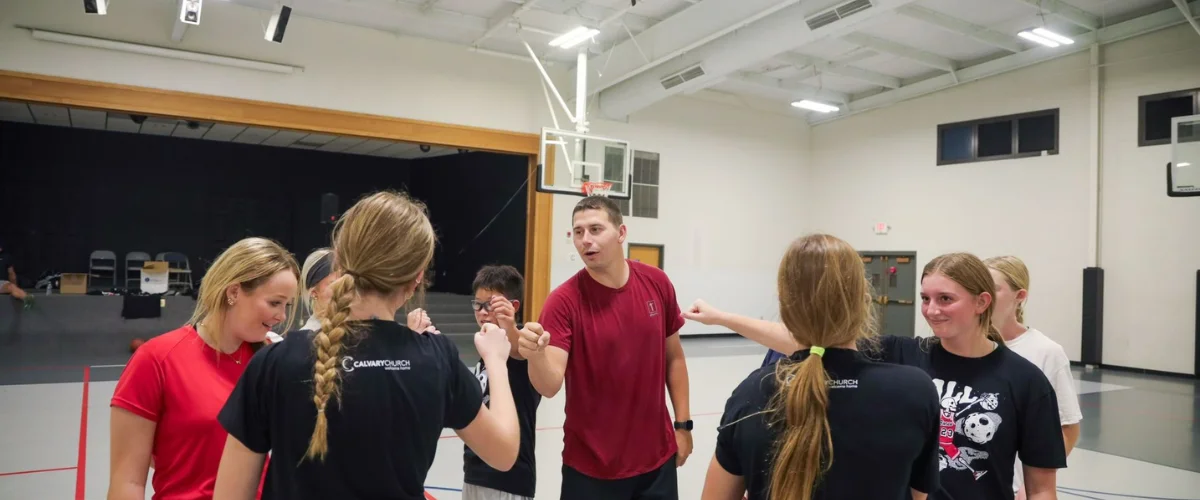
A good youth basketball schedule leaves room for learning, competition, independent practice, basketball training, and recovery. The right frequency depends on the athlete in front of you, not on how many sessions another player is completing.
At Casey Teson Basketball Academy, we help players develop basketball fundamentals through purposeful instruction and game-related work. If you have questions about basketball training or want to determine how one of our programs could fit alongside your player's current schedule, call us at (314) 873-5901 or Contact Us.